
Hiking Pallay Punchu (2025): Cusco’s Alternative Rainbow Mountain
Pallay Punchu of Apu T’acllo is Cusco’s third and newest Rainbow Mountain. This dramatic, jagged, colourful mountain was only discovered by the outside world in 2020.
It has since had its debut on social media but is surprisingly still very quiet, receiving considerably less visitors than the iconic Vinicunca Rainbow Mountain. In fact, we were the only people at the top!
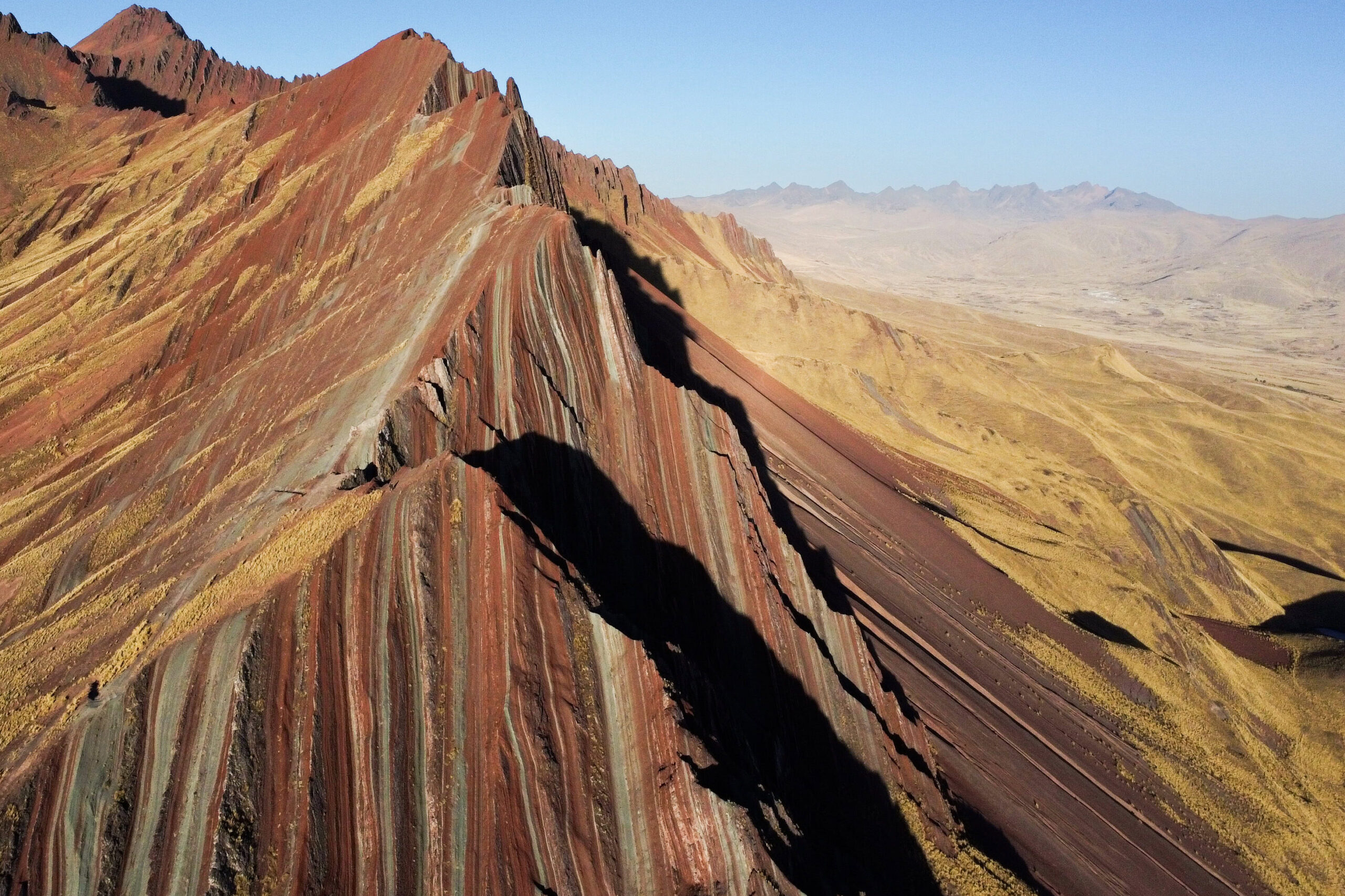
Pallay Punchu in Quechua translates to ‘adorned poncho’ which is very fitting as the colours and shape of this sharp mountain resemble that of a typical Andean poncho.
After seeing some pictures of Pallay Punchu, we were adamant on visiting. However, there was such little information online about hiking Pallay Punchu and how to get there independently. Instead we found endless advertisements for expensive tours that were well outside of our budget.
With the little information we could find and a whole lot of independent research, we decided to wing it and try to hike Pallay Punchu on our own.
Although it’s time consuming to reach the trailhead, it isn’t difficult to visit without a tour. Once there, the trail is very obvious and well-marked, meaning that a guide isn’t necessary either.
So that you don’t have to go through the same pain of hours of research, we have put together a complete guide on hiking Pallay Punchu that includes absolutely everything you need to know. We’ll include the different hiking options, difficulty of the hike, how to get there with or without a tour, cost, what to take with you and more.
Let’s get started!

How difficult is the Pallay Punchu hike?
The difficulty of the Pallay Punchu hike is something we found so much conflicting information about online. Once we arrived, we realised the reason for this is that there are a few different hiking options.
There is one long road through the mountains that connects the town of Layo and the village of Occobamba, and in the middle you will find Pallay Punchu.
This road makes it possible to take a tour or taxi up the mountain to an unmarked ‘car park’. Although it’s less a car park and more just a flat patch of grass at the side of the road. From here you can hike to the top of Pallay Punchu in less than an hour.
The hike takes you along a loop that leads up to multiple viewpoints on the mountain ridge. It’s around 2.5 km in total, with an elevation gain of 200 m. Though short, the route to the top is steep and you will reach altitudes of 4,700 m. This can take your breath away, even if you’re well acclimated.
If you’re visiting independently by public transport, you will need to do a much longer hike starting from the town of Layo. This is the option we chose. The first half of the hike took us along the road from Layo up to Pallay Punchu. We then joined the loop to the viewpoints along the mountain ridge, before continuing on to Occobamba village.
This hike is 14 km with an elevation gain of 772 m. In total, the full hike took us around 5.5 hours with plenty of stops for photos and snacks along the way.
Although the long hike is the more difficult option, we really recommend it as the views along the way are stunning. You’ll get a view of Laguna Langui behind, towering red and multi coloured mountains in front and snow-capped mountains peaking through as you make your way down to Occobamba. Alongside this, it’s even more rewarding when you reach Pallay Punchu itself.
Both the short and long hiking options are not technical. Even though the mountain looks steep and impossible to climb on the photos, in reality the path is very safe.
The hike is definitely doable for people with varying levels of fitness. However, the altitude does make it a little tricky.
At the time of hiking Pallay Punchu, we had spent 6 weeks living at altitude in Cusco and we were still pretty breathless at times. Our advice is to take it slow, drink plenty of water and make sure that you spend at least a few days acclimating in Cusco before you attempt it.
Below you can find the Pallay Punchu hike breakdown:
Difficulty: Moderate
Altitude: 4,700 m
Elevation Gain: 772 m on the long hike from Layo // 200 m on the short loop to the Pallay Punchu viewpoints
Distance: 14 km from Layo to Occobamba // 2.5 km round loop to the Pallay Punchu viewpoints from the car park
Time: 5.5 hours for the full hike // 1.5 hours for the short hike (both depending on how long you spend at the top)
How to get to Pallay Punchu from Cusco
Once you’ve decided on whether to do the short or long hike, you’ll then need to choose how to get there.
If you want to do the full hike (which we fully recommend), the best and cheapest way is to take public transport from Cusco to Layo.
If you’d rather just do the short loop to the Pallay Punchu viewpoints, you’ll need to either take a tour or a private taxi that will drive you all the way up the mountain to the ‘car park’.


Independently
By Public Transport
If you’re travelling via public transport, we recommend leaving early in the morning between 5 am and 6 am. We made the mistake of not leaving until 8 am and ended up hiking the final section in the dark which we don’t advise.
Alternatively, you could spend the night before the hike in Layo so that you can begin as early as you wish. Apu T’acllo Lodge seems to be a great accommodation option with good reviews.
Below are detailed instructions on how to get from Cusco to Pallay Punchu and back:
- Bus from Cusco to Sicuani – Take a taxi to ‘Terminal Terrestre Cusco – Sicuani, Los Rapidos’ bus station. Buses leave for Sicuani once they are full. The journey takes around 3 hours and costs S/13 ($3.50) per person, terminating at ‘Terminal Canchis‘ Sicuani.
- Tuk Tuk to the Layo Combi Station – Just outside the bus terminal you will find Tuk Tuks waiting that can take you to the combi station (shared van) that operates to Layo. This short journey costs S/1.50 ($0.40) per person. The combi station is located on the corner where the streets of ‘JR. 10 De Enero’ and ‘JR. Salvador Allende’ meet. It’s not too far so you can walk here if you’d prefer.
- Combi to Layo – From here, you’ll need to pay S/6 ($1.60) per person for the van to Layo. This takes just 1 hour. Bear in mind that the combis leave when full so you might have to wait for a while before you set off. We were waiting for around an hour which did put us a little behind on schedule.
- Short walk to the trailhead – After about 4 hours of travelling in total, you’ll reach Layo where the hike begins. You’ll need to take a short walk through the town to reach the trailhead which we’ve marked on google maps for you here. However, we recommend downloading ‘maps.me’ as it shows the full trail clearly.
- Hike all the way to Occobamba – This one road leads all the way to Pallay Punchu and continues on to Occobamba.
- Bus from Occobamba to Sicuani – At the end of your hike, you can flag down a bus on the main road that passes through Occobamba village. This road connects Puno to Cusco which means it’s impossible not to catch a bus or combi here. We flagged down a combi that took us to a village called Marangani for S/1.50 ($0.40) per person. We then switched to a combi that took us to Sicuani for S/2.50 ($0.60) per person.
- Bus from Sicuani back to Cusco – Once in Sicuani, we headed back to Terminal Canchis and caught the bus to Cusco for S/13 ($3.50) per person. As we set off a little late, we didn’t arrive at the bus station until 8 pm and there were still frequent buses leaving so don’t worry about missing the last bus home.
You could be lucky and manage to flag a bus down in Occobamba that takes you directly to Sicuani or even all the way to Cusco.
It’s worth noting that you can do a return hike to Layo or hike the opposite way around from Occobamba to Layo.
However, we don’t recommend this as it’s not clear when the last colectivo returns to Sicuani from Layo. When you end the hike in Occobamba there will always be a bus passing that can get you home.
Altogether the transport to and from Cusco costs S/37.50 ($10) per person.
By Taxi
If you’d prefer the more direct route and want to opt for the shorter hike, you can hire a private taxi.
Taxis typically cost around S/500 ($135) and will drive you up to Pallay Punchu, wait for you to complete the hike, and then take you back to Cusco.
Although this is expensive, you’ll have more flexibility than if you take a tour, meaning you can spend as much time as you like at Pallay Punchu.
We’d recommend trying to find a few people to share with so that you can split the cost.

Pallay Punchu Tour
There are a number of agencies that offer tours to Pallay Punchu. However, it’s uncommon to see them advertised all over Cusco like you’ll find with the other two rainbow mountains.
Instead you may have to pop into a few tour agencies and ask if they offer it. Alternatively, you can do a quick search online to find the best deal.
Salkantay Trekking is a popular tour operator that offers the hike to Pallay Punchu. However, on this tour you’ll begin the hike from Layo. Therefore, if you want a tour that takes you all the way to the top with minimal hiking, you’ll need to make sure you look for this specifically.
Tours typically pick you up from your Cusco accommodation between 4 am and 5 am. They’ll then transport you either to Layo or to the car park of Pallay Punchu, stopping on the way for breakfast and to admire Laguna Langui.
The cost of a tour is usually around S/436 ($120) per person and includes transport, breakfast, lunch, a guide and hiking poles.
Entrance Fee to Pallay Punchu
When we were looking into tours to Pallay Punchu, we read that there was an entrance fee of S/10 ($2.60).
However, when we arrived independently we didn’t see any official entrance or bump into anyone collecting an ‘entrance fee’. Therefore, in our experience it was completely free. However, we recommend bringing some cash with you just in case.
What to expect from the Pallay Punchu Hike
Pallay Punchu Hike: Layo to Occobamba
When you arrive in Layo there is a short, flat walk through the town to reach the trailhead.


Once on the trail, the route follows one mountain road the entire way. Despite this, we only passed one car, a couple of motorbikes and no more than 2 other hikers along the way.
The trail begins with a gradual incline through fields and pastures with towering mountains looming in the background. This first section takes around 1.5 hours and is the easiest part of the hike.
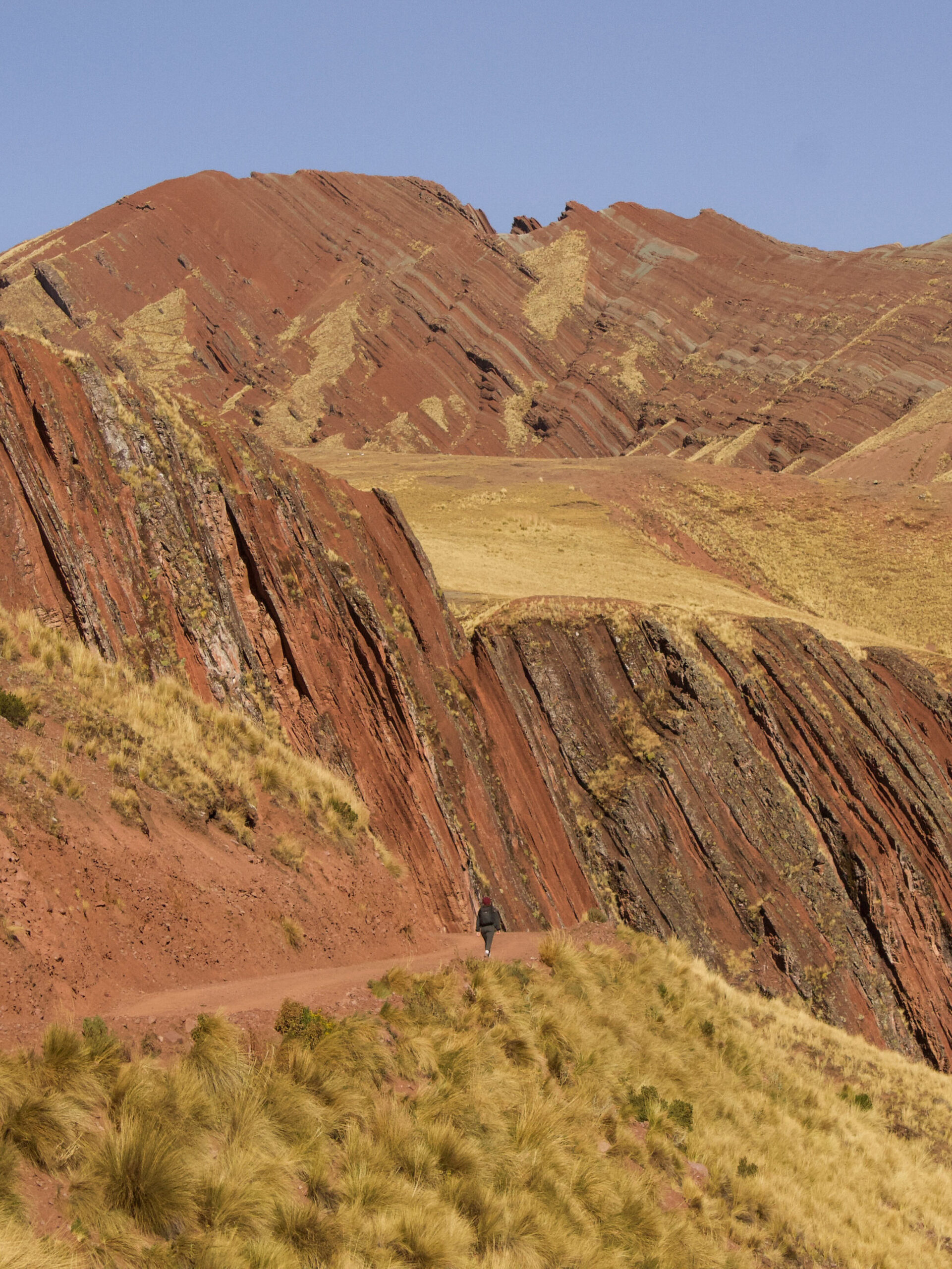
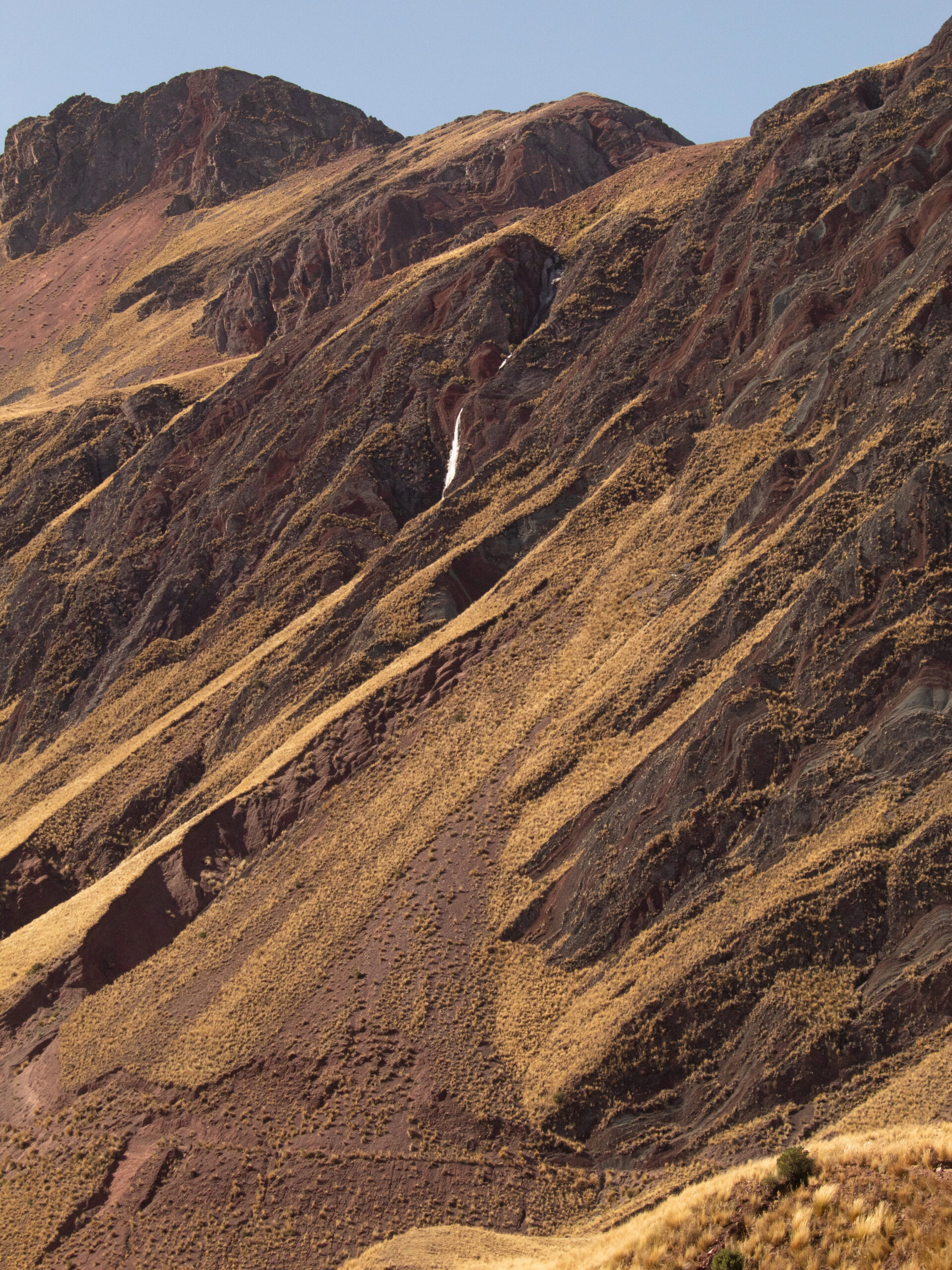
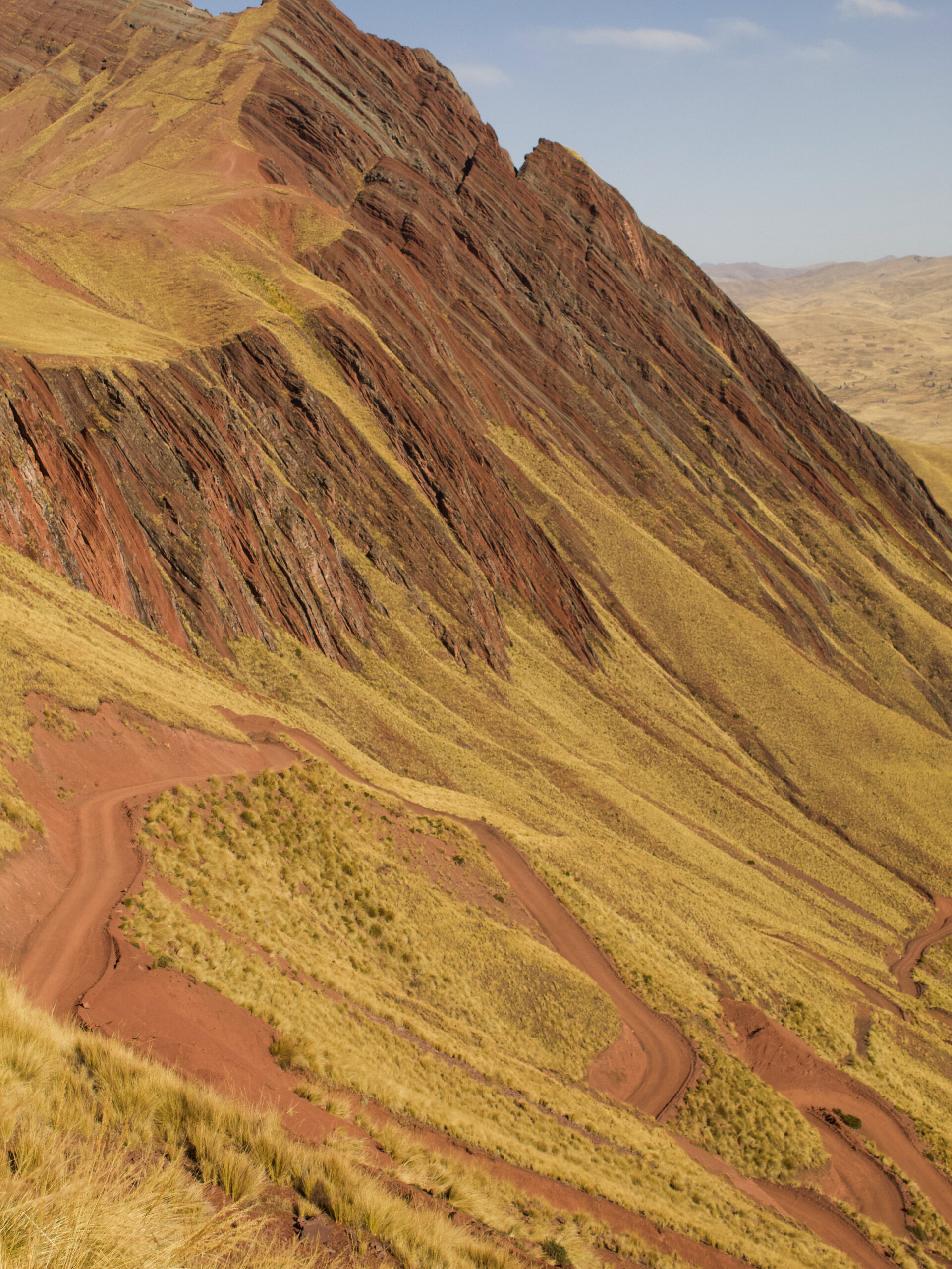
After this you’ll reach a set of switchbacks that convert what would be a very steep incline into longer, more gradual sections. The ascent from here doesn’t get too much steeper than the previous section. However, as you begin to reach higher altitudes you’ll start to get a little more breathless.
It takes around 45 minutes to complete the switchbacks and reach the start of the loop that takes you up to the viewpoints along the ridge of Pallay Punchu. Along the way you’ll get closer to the colourful mountain and you can even see a petrified waterfall. Make sure to look back every now and then to enjoy the views of Laguna Langui.


From here you’ll begin the hardest section of the hike that takes you to the iconic viewpoints at the very top of Pallay Punchu. We’ll explain this in detail in the following section.
After spending around 1.5 hours in total hiking to the miradors, enjoying the view and taking photos at the top, you’ll begin the descent to Occobamba.

You’ll join back onto the mountain road and enjoy spectacular views of snow-capped mountains on the hike down. This section is very easy, however, there are a few sections where you’ll need to jump across rocks to cross the river that flows through the road multiple times.
This final downhill section takes just short of 2 hours.
In total expect the hike to take around 5.5 hours depending on your speed and how many stops you make.
Short hike to the Pallay Punchu viewpoints
Whether you opt for the long hike or decide to take a taxi or tour, there’s no getting out of the loop that takes you to the Pallay Punchu viewpoints along the upper ridge.
In our opinion, this is the most difficult section of the hike. As you look up to Pallay Punchu you’ll see a very steep set of switchbacks leading to the top of the mountain. This section is well signposted with arrows and white-painted rocks marking the trail.

Starting at 4,500 m, you’ll need to ascend another 200 m to reach the top. As you’re at such a high altitude this is very tiring. We recommend taking lots of breaks and drinking plenty of water.
Once at the top you can stop at various points along the ridge to take photos and enjoy the view.
As you reach the end of the ridge, you’ll see a shorter path leading back down to join the main road. This section of the path is not marked but we still found it very clear to follow.
You can hike the loop in either direction, this is completely up to you.
Pallay Punchu Map
Best time to visit Pallay Punchu
The best time of year to visit Pallay Punchu is in Peru’s dry season between May and September. This will allow for clear blue skies which make for perfect visibility. With less rain, trekking conditions are also at their best.
However, we’ve heard that the colours are more vibrant after rain, as long as the mountain is not covered by clouds. If you do visit in the rainy season between November and March, make sure to take greater care on your hike.
In terms of the best time of day to visit it really depends. Due to the positioning of the mountain, sections of it are lit by the sun all throughout the day, so whatever time you visit you’ll be able to see the colours popping.
However, if you have a drone that you wish to fly, we recommend arriving in the morning for optimal lighting.

What to pack for the Pallay Punchu Hike
Whether you visit independently or on a tour, it’s super important that you come prepared. Below are some essentials that we recommend packing:
- Plenty of layers – When you are hiking (or even driving most of the way) up to high altitudes in the mountains, the weather can be very temperamental. Make sure to layer up so that you can regulate your temperature.
- Waterproof jacket – Even if you are visiting in the dry season and it looks clear when you leave for the day, there is always a chance that it can rain.
- A good pair of hiking boots – Wear hiking boots with good ankle support even if you are doing the short hike as the terrain up to the viewpoint can be uneven at points.
- Sunscreen – As you are close to the equator and at a high altitude, the sun is very strong even in the winter so don’t forget to pack sunscreen.
- A phone and portable charger – This is particularly important if you are going hiking independently. This way you can always have a charged phone to contact someone in case of an emergency.
- A torch or headlamp – We recommend bringing a torch just in case you get delayed and end up hiking down in the dark. We left a little late and did need to hike the final section in the dark so having one was very useful.
- Camera gear – If you have camera gear, you’ll want to take it to capture this stunning mountain. We carried our drone up and we didn’t regret it as the footage was incredible.
- Snacks, lunch and plenty of water – There aren’t really any shops or restaurants nearby so it’s important that you take plenty of food and water, especially if you are visiting independently or don’t have food included on your tour.

Pallay Punchu vs the original Rainbow Mountain (Vinicunca)
Pallay Punchu and the original Rainbow Mountain that’s named Vinicunca are very different in many ways. We recommend visiting both, but we’ll do a quick comparison just in case you only have time for one.
- Location – Both mountains can be reached from Cusco within 3-4 hours.
- Altitude – Pallay Punchu sits at 4,700 m which is slightly lower than Vinicunca that reaches 5,200 m. This 500 m really can make a big difference in the difficulty. We remember our heads exploding when hiking Vinicunca but aside from breathlessness when hiking Pallay Punchu, we didn’t really experience any altitude sickness.
- Difficulty – If you’re only doing the short hike to Pallay Punchu then we would say that it’s an easier hike than Vinicunca. However, the longer hike from Layo was much more tiring as it is 14 km rather than the 4 km hike to Vinicunca.
- Crowds – Vinicunca is the most popular rainbow mountain to visit and there are endless tour companies that bring groups here. It’s almost always crowded and near impossible to enjoy the view on your own. On the other hand, we had Pallay Punchu completely to ourselves. We only saw 2 other hikers who were walking in the opposite direction.
- Hiking views – Both hikes are different but equally as beautiful. The Vinicunca hike takes you through a gorgeous red valley, surrounded by snow-capped mountains, while Pallay Punchu has beautiful views of Langui lake, dramatic rocky mountains and snow-capped mountains towards the end.
- The mountains – As you can see in the photos above, the mountains look pretty different. Though Vinicunca doesn’t look anything like most of the heavily edited photos you see, we do think it has slightly more colours than Pallay Punchu. However, the sheer mountain edges and dramatic peaks of Pallay Punchu make it the more impressive mountain overall in our opinion.
If we only had time to visit one, we’d probably choose Pallay Punchu because it was magical to have it all to ourselves and it’s one of the most impressive mountains we’ve seen. However, Vinicunca is still special in its own right and worth the visit.
Final Thoughts on Hiking Pallay Punchu
After a very long day and nearly 30,000 steps hiking Pallay Punchu, we can honestly say it was completely worth it. We highly recommend adding this hike to your Peru Itinerary. Whether you go on your own or with a small group tour, you’ll have the best experience.
We hope that this guide has made planning your trip to Pallay Punchu much easier than it was for us. As always, if there are any questions we haven’t answered in this guide, feel free to send us an email, we’re always happy to help!
Please note that some links on our blog are affiliate links.
If you decide to purchase anything through our affiliate links, it may make us a small commission with no extra cost to yourself. This helps to support us and allows us to keep writing our travel blog to bring you free tips, guides, and recommendations. As always, we thank you for your continued support and for joining us on this journey.
Happy Travels!


